Traveling to Paris: We prefer Air France. For travel to Paris by Eurostar — and for all modes of rail travel within and near Paris, see Paris by Train . For booking high speed (TGV) trains to and within France, we use http://www.capitainetrain.com/ . For rail travel throughout Europe, consult the excellent website, The Man in Seat 61. And see notes below about "Being British" (or at least, not American) in order to save money on fares and "Tips for buying TGV tickets.")
When: We like Paris in the spring or fall, but winter can be great as well — the barren trees open views not seen at other times. Summer can be hot, and beware: beginning in early June tourist crowds are thick. In July-August, about one-third to half of our favorite Paris restaurants are closed for vacation and general repairs.
Sleeping in Paris — Hotel or Apartment? It depends. For most of our first visits to Paris, we stayed in hotels. Among the advantages: The hotel’s receptionist/ front desk will gladly make restaurant reservations for you, and arrange for your taxi back to the airport or train station, etc. — these kinds of things are very useful if your French is poor or rusty. Most of our recent stays have been in apartments. You get more space for the cost, but even more important to us, we find the overall apartment experience to be culturally richer.
Making dining reservations — phone, fax, email, and “La Fourchette.com”: For some sought-after Paris restaurants, we make reservations weeks in advance. Few Paris restaurants have web sites, although the number is growing; many of them are very basic and will not accommodate reservations, but this is slowly changing. We usually reserve by phone (but be prepared to give a confirmation cell/ mobile telephone number, in French — I make sure I have it written out in front of me, to minimize stumbling over French numbers, especially those extra-difficult ones past seventy). Finally, in Paris and in some of the newer countryside places, we’ve had success using La Fourchette/ The Fork (similar to OpenTable in the United States); although the number of participating restaurants was quite limited at first, the roster is growing, and some of our favorites can easily be booked this way.
Food shops/ foods & stuff we bring home: To each his or her own, but in recent trips to Paris, we usually bring home wines that we can't find outside France; various salts, peppers and vanilla beans from G. Detou, 58 rue Tiquetonne, 2eme, or from Bruno further down the same street; various varieties of Normandy butters from open air markets and supermarkets (we freeze them in a Tupperware container and bring them home in the middle of our checked luggage); hard cheeses, usually comte, from shops including Laurent Dubois, 47 Ter Boulevard Saint-Germain, 5eme, that will individually vacuum seal each hunk. We used to brig back fresh on tap unpasteurized mustards from Maille, 6, place de la Madeleine on tap, but now we just buy cheap and strong supermarket jars and them in our bags inside dirty socks. We always bring back chocolates, including from Jacques Genin, 133 Rue de Turenne, 3eme, and now in the 6th as well. For silver cutlery, etc., we go to the Saturday Vanves market in the outer 15th.
Live music in Paris: We love classical music concerts at Sainte Chapelle or Saint Ephrem — find schedules and get on line tickets Classixtic.com. For piano bar/ live jazz, drop by Cafe Laurent in the Hotel d’Aubusson, 33, Rue Dauphine, 6eme (Thurs-Sat, 18:30-20:00 piano solo; 21:-24:00 jazz (10 Euro drink charge).
Our preferred French-English “Menu translator” — and using “Dropbox” for off-line access, anywhere, anytime: We gave up on the oddly organized “Marling Menu Master” (a French-English dining translation booklet) a few years ago, in favor of the excellent French-English food glossary by Patricia Wells. Patricia now dines with us frequently, and she comes through about 93.78 percent of the time. The key is that we have downloaded her glossary to our iPhones via Dropbox.com (it’s free). Then we added her glossary to our “favorites” in our Dropbox account. To do that: Once you have your document or file uploaded to dropbox and bring it up on your screen — whether on a smartphone, iPad, home computer etc. — you then need to designate it as a “favorite” by clicking on the star in the upper right corner. Presto, we have Patricia’s glossary even without access to the Internet.
Using “Dropbox” for copies of passports, documents, rental vouchers, etc.: We also use Dropbox.com for more of our travel needs. We post to our dropbox account pdfs and Word docs of our car rental vouchers, TGV (high speed train) tickets, itinerary, lists of restaurants we may visit, credit card terms & conditions re rental car damage waiver, etc. We can pick this up not only from our own iPhones but also from any computer in the world. And because our iPhones are password protected (easy to do), we feel pretty safe putting on other sensitive stuff that we would need in an emergency: copies of our passports, credit cards, driver’s license, etc.
Web sites and blogs (Paris, France and the French): There are many Paris Web sites and blogs, but our favorite "all around" sites include Paris Update (great for listings of current museum exhibits, and also take a look at our friend David Jaggard's bi-weekly humor column, "c'est-ironique!"; Secrets of Paris, by Heather Stimmler Hall, an American writer, publisher, and tour guide who has lived in France since 1995 (you can sign up, as we did years ago, for her free monthly emails), and Colleen's Paris, by a flight attendant who's lived in the city since 1992. Also fun is Eye Prefer Paris, a blog by a transplanted New Yorker, Richard Nahem, who now lives in the Marais and provides tours and cooking classes. We have frequently consulted the France and Paris hotel reviews posted on Tripadvisor (together with the Tripadvisor France/ Paris forums).
Note, very useful general information remains on Paris Notes. It contains numerous well-written articles, tips, and usefully-categorized links to about 500 other Paris-related sites (including excellent listings of hotel and apartment Web sites). First-time visitors will especially appreciate an excellent overview, “Paris for Beginners.” Unfortunately, Paris Notes has been discontinued, but so far the web site still exists.
Of the many other Paris / France-and-the-French-related Web sites and blogs, there are a few speciality sites that we highly recommend:
Paris dining Web sites: We rely on Paris by Mouth, a website featuring some of our favorite Paris food writers: Meg Zimbeck, Barbra Austin, Alec Lobrano, Clotilde Dusoulier, Dorie Greenspan, John Talbott, Julot, Phyllis Flick, Patricia Wells, and Wendy Lyn.
More specifically, we'll first mention our friend John Talbott's Paris -- he can also be found on the Chowhound (France forum) — our main source for dining recommendations, offered by serious eaters, covering Paris and beyond in France. Another excellent Paris dining blog is Rosa Jackson's Edible Adventures (Paris, Nice and Beyond). Jackson is Canadian, lives in Nice, and she writes frequently about dining in Paris, where she also has lived and often visits. In fact, she’s the dining reviewer for (now defunct) Paris Notes, among many other publishing responsibilities. Jackson’s writing is lively and we’ve found her recommendations to be very reliable. We enjoy the Diner's Journal section of Alexander Lobrano's blog (as well as his books, including Hungry For Paris — a dining guide, and more). We also consult Heidi Ellison's restaurant reviews at Paris Update. For a natural-wine take, we look at the not-so subtle blog, not drinking poison . Finally, when friends have asked us for vegetarian recommendations (?!?), we have referred them to the Paris page of Richard Gillmann's possibly helpful lists of such places — see Vegetarian Restaurants in Paris.
Food oriented web sites with a Parisian flavor: David Lebovitz's Living the sweet life in Paris presents everything we need to know about chocolate and ice cream, and much more. The writing is lively and authoritative, as one might expect from a former pastry chef of Chez Panisse who has lived in Paris since 2002. (The photographs alone are worth a visit.) Another great food site is Chocolate & Zucchini, by Clotilde Dusoulier, a young Parisian who was inspired to cook and love fresh produce while living in the San Francisco Bay area. Her main site is in English, with a version in French. See especially her helpful listing of marchés volants — neighborhood markets for which vendors set up on specific days for a few hours, usually in the morning. (These markets are our favorite sources for lunches when we stay in a Paris apartment. Here's another Paris street market site that helpfully shows metro stops and map links; but beware, the listed closing times are later than the actual closings.)
Web sites addressing French social and cultural issues and analysis: We've enjoyed Polly-Vous Francais?, a smart and intelligent blog. The writing is clear, amusing, and confident — and yet gentle at the same time. For a range of serious to light "French News," we read France Today. When we are feeling more serious we turn to news and analysis presented by Arthur Goldhammer in his site, French Politics. Lately we've also enjoyed France 24.
Web sites addressing the "expat experience" — and Paris travel journals: There are a number of blogs and sites that provide an interesting window into the "expat experience," generally from an American-in-France perspective. Among the best, we think, is Southern Fried French, by Lynn McBride (formerly of Charleston, South Carolina) — a magazine editor and writer for France Magazine, among others, who has lived in the French countryside since 2003.
Paris guidebooks: Although we no longer bring a guidebook, on or early visits we prefered the Michelin Green Guide for Paris. These guides also are published in French, Italian, German, and other languages — and are frequently seen in the hands of European tourists. The Eyewitness and Access guides also are very good.
Arrondissements & pocketbook map: Paris is divided into 20 districts — called “arrondissements” — starting with the 1rst, in the center (where the Louvre is located), and circling in the pattern of an escargot shell to the 20th, far from the center. (See a map and brief description of each arrondissement here.) If you stay in the city for more than a few days, you’ll want a map that shows all of the streets, not only the main rues as the free tourist maps do. You can buy a map, in small pocketbook form, at most “Tabacs” or newspaper stands. (We use "L'Indispensable" — "Plan de Paris par arrondissement," which privides an index of all street names.) For considering the location of a hotel, apartment or restaurant, we click on Google maps, and enter the address; then use streetview to take a virtual walk throughout the neighborhood.
Métro tickets, public buses, and public bikes: Paris is a walking city. But when your feet wear out or it’s just too far, the Métro is great and very easy to use. We like Ben Lam's comprehensive Web site, Paris by Train. This intelligently organized and well written site addresses most questions one might have about using the Métro, RER, TVG, and Eurostar — including how to get to and from the airports (on the Air France bus or RER), weekly and monthy Métro passes, etc. See also the official RATP site in English. Métro trains arrive at two-minute intervals during rush hour and run until about 1:30 a.m. A few main parts of the bus system run all night. Purchase Métro tickets at most (underground) Métro stations in groups of 10 — that’s called a “carnet” (pronounced “car-nay”). The price is 13,70 € for 10, which is discounted over the single ticket price. Even at the full rate it’s quite a deal, and reflects a 60 percent public subsidy. The tickets are good for both the Métro and the “RER” (the regional commuter trains), as well as all public buses. Keep the ticket with you — you may be asked to show it by the Métro police, and if you don’t produce, there can be a big fine. If you stay for a week or longer, you can save further by purchasing a weekly or monthly pass, a carte orange (or Pass Navigo Découverte), for which you’ll need a passport-size photo. See Paris by Train. You see more of the city by using the public bus system (see map), but although buses often use dedicated lanes they still get bogged down in traffic. And figuring out how to get from point A to B is not quite as easy as with the Métro, but it's pretty easy if you get the booklet, "L'Indispensable" — "Le Bus, Repetoire des 99 linges," which provides easy-to-comprehend maps of each of the city's lines. And note: Instead of paying at least 25€ for a two-day pass on a private tour bus (with those almost unintelligible recordings in four languages), just hop on a city bus line such as the number 72, which runs from Hotel de Ville in central Paris to the western suburbs. Much of the route is along the Seine and passes many of the major sites.
Car rental: The last thing we want in Paris is a car. But for exploring the countryside, a car is very useful, and often necessary. You will save considerably by booking before you arrive in France. When arranging from the United States, we usually use the services of a broker, Gemut.com (talk to a real person by calling 800-521-6722) who works with several major agencies to find the best rate. Note: You will be charged substantial extra fees (35 Euro) if you pick up your car from a rental office that's located in an airport or rail station; there’s no extra charge for returning the car to the airport or rail station.
Walking tours: We have often enjoyed “Paris Walking Tours” — two-hour tours in English, 12€ per person. The schedule for the current and following month can be found on line. For most walks you simply meet at a designated Métro stop at a certain time of day (usually 10:30 a.m. or 2:30 p.m.) and join a group of others who show up, with no need to reserve. The operation is run by an English couple, Peter and Oriel Caine, and when they do not conduct tours themselves they employ exceptionally qualified Americans and Brits who have studied art or history or both while living in Paris for many years. (They also have a London Walks site, linked at the Paris web site.) We also have heard good things about “New Paris Tours,” which offers a free 3.5 hour tour (but the guide will expect a tip).
Museums and passes: Museum passes, good for two, four, or six days, can be purchased at most underground Métro windows. Pass holders are permitted to avoid the entry lines and jump in front of all those poor folks queued up to purchase tickets. At some locations, including the Louvre, pass holders are provided a special entry. One of our favorite museums, Carnavalet (in the 4th arrondissement, the Marais), is free. It covers the history of Paris, all in a huge 17th century mansion. Our newest "favorite" museum is the Cite de la Music (the history of musical instruments). For a list and description of the approximately 120 Paris museums (with hyperlinks), click here. Finally, for an excellent and thoughtful piece touching on how to, and how not to, experience a museum such as the Louvre, see this, by Michael Kimmelman. (Caveat/admission: To some extent, we've been guilty of some of the things he describes . . . .)
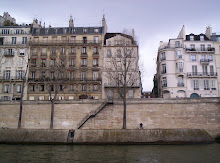
Two of our favorite places in Paris are islands: In the deep of winter, we enjoy the Ile St. Louis, especially at night — stroll around it, and/or view it from the right or left banks. But during the days of the spring, summer and fall months, the Ile can be unpleasantly overcrowded. We also enjoy the Place Dauphine (near the tip of Ile de la Cite). Speaking of the river’s “banks”: the river Seine, of course, bisects the city; the right side of the river’s flow is the “right” bank; the left is the “left.”
ATMs and credit cards: Throughout Europe, one gets the best exchange rate by using ATMs. All U.S.-issued credit cards charge one percent for the foreign currency transaction, and most also add — for no good reason except that they can — another two percent, for a total of three percent on each transaction. So everything you put on the credit card is the opposite of “on sale,” and costs three percent more. Very few credit cards today don’t charge this unnecessary additional two percent. You can ask your credit card company whether they charge the extra two percent, but be sure to speak with a supervisor because most telephone clerks won’t really know the answer. One card that does not charge the extra 2 percent is issued by CapitalOne. Travelers checks are unnecessary and a hindrance.
Ubiquitous odd sights — rolled carpet and green plastic: You will see quite strange rolled-up pieces of carpet in the gutters, near the drains at street corners. Contrary to the assumptions of some, these are not left so that strollers may wipe sidewalk dog deposits from their shoes; they are instead used by the “green men” (the garbage collectors and street cleaners) to divert flows of storm drain water in order to flush paper and cigarette butts the gutters. And why are the street garbage receptacles (those bags hanging from hoops) clear green plastic? Because the former and more traditional metal mesh garbage receptacles proved too dangerous when terrorist bombs exploded inside them.
“City of light” (not lights) — Yes, Paris looks great at night, and many of its monuments, major and minor, are indeed beautifully lighted. But the city’s most used moniker — “ville lumière”— captures the idea of intellectual light — not artificial illumination devices. It’s a “metaphor for political, spiritual, cultural and intellectual energy.” And so although you may often see Paris referred to in articles and some guidebooks as the “City of Lights,” it’s probably more accurate to drop the “s” — “City of Light.” For more, see this fine article by David Downie.
Money saving tips: Be British (or at least avoid some American web sites): If you can book by using a non-American web site you might save substantially. For one example, we saved more than $500 on a one-week chateau rental in the Dordogne by booking through a British Web site instead of an American one for the exact same property, terms and dates. Another very useful French/European site for finding relatively inexpensive vacation homes in France is Gites de France (part of the site is in English). As a second example, for booking high speed (TGV) trains to and within France, use http://www.voyages-sncf.com/
(the official site) or http://www.capitainetrain.com/ (we prefer this new site; it's in French, but easy to use) or http://loco2.com/ (in English, charging a premium). If you use the official site, when asked to state your country of residence, just click "Antarctica" -- not the US or Canada, or else you will be redirected to RailEurope.com, where you can often expect to pay much more for the exact same ticket.
Tips for buying TGV (high speed trian) tickets: We purchase and print train tickets through http://www.voyages-sncf.com/ (the official site) or, more recently, http://www.capitainetrain.com/ . Buying super-reduced rate “PREM” tickets 90 days in advance has so far always worked out for us even though they are completely nonrefundable.
Day trips: Many first time visitors — especially Americans, who have to fly over a lot of earth to get to Paris — want to “make the most of it,” and so they plan to combine a week in Paris with "day trips" to one or more of the cathedral at Chartres, Louis XIV’s chateau at Versailles, Monet’s garden in Giverny, Fountainebleu, Chantilly, Vaux-le-Vicomte, the Loire Valley, or Normandy (the WWII landing beaches), etc.
We'll say the same thing that we candidly tell friends: This is rather like going to a museum and rushing through every room in order to check off all the high points from a checklist. You can do it — and pure adrenalin probably will propel you through. But unless you can slow down a bit and really try to absorb, will it be a worthwhile experience to you? Maybe so, but we can’t recommend it.
We recall a sage teacher who advised us not to “overload” our days. And so we suggest staying in, and trying to get to know, Paris. Venture out to Versailles or Chartres or Giverny if you must, but try to leave other areas off your list. (On the other hand, if you ignore this advice — and in our experience many do! — we still bet that you’ll be pleased with your own choice; traveling in France, even in an overly ambitious way, is usually quite fun.)
If you are staying in a Paris for more than a week, and/or if you've been there at least once before, it can be worthwhile to take a day trip outside the city. To plan your trip by train, consult Paris by Train. (For train transportation to Giverny, see this useful post on Tripadvisor.) In addition to the standard options listed above, one of our our favorites is the unassuming town of Auvers-sur-Oise (reachable by train), where Vincent Van Gogh spent the last, and very productive, months of his life — and where he now lies next to his brother, Theo, about 100 feet from where Vincent painted crows over the wheat fields. (Throughout the town and surrounding fields are reproductions of Vincent’s paintings at, or relating to, the spot depicted; see them at Musee d’Orsay before you travel to Auvers.) For more options, check out the book, An Hour From Paris, by Annabel Simms (descriptions of 20 destinations in the Ile de France).
Driving in the countryside/ Maps and GPS: We use both a GPS device and Michelin maps. But note: One cannot rely on the GPS alone. If you don’t study the map first, and orient yourself to the area and surrounding main towns, your GPS (we call ours Madame) may take you, from, let’s say, Roanne to Julienas in the Beaujolais, on extremely narrow one-lane back-country mountain logging roads, at night, in the fog, with no other light or sign of civilization in evidence for 45 minutes of tense white-knuckle and stomach-churning driving, with my wife grimly offering muted sighs and suggestions, while we fully expected the tin man (and flying monkeys) to jump out from behind the black trees and wave us down. And yes, we were quite late to dinner. So, GPS, good. But know your hard copy map as well.
For route and time planning, we use a combination of Google maps, Michelin hard copy maps (1:200,000, which helpfully show especially scenic roads with a green border, and also show various monuments — chateaux, ruins, churches, etc.), and viamichelin.com (free — it helpfully allows you to find Michelin-recommended hotels and restaurants in any area).
Speaking English in France; magic French words; and learning French on line: Despite years of study and many visits to France, our French still is quite poor — and yet we try, and it is almost always appreciated. Here are two quick tips that will smooth your way: First, at a minimum, learn and use constantly the “magic words,” which are very easy to say: “Bonjour Monsieur” and “Bonjour Madame.” Utter either of these two simple phrases as soon as you make eye contact with your hotel receptionist, store clerk, waiter, taxi or bus driver, newspaper vendor, etc. This will start you off on the right foot, and you are likely to be just fine, even if you can speak no (or few) additional words of French. Second, never speak English without asking first, “Excusez-moi, parlez-vous anglais?” (“Excuse me, you do speak English?”) Doing otherwise, and blaring ahead with questions in English (or German or Japanese, etc.) is just plain rude, and may quite understandably trigger a less-than-warm response.


















.jpg)






.JPG)




.jpg)
12 comments:
People should read this.
Amazing information and looking forward to going to the places you recommend. Thanks for the tips!
Best Regards,
Bob
Jake:
I was reminiscing about our trip to Paris and came across your blog. I do want to mention a gentleman by the name of Michael Osman, (Paris number) 01 40 15 62 17, DiscoverParis http://www.geocities.com/parisfinder/
When traveling with our kids (though Will is pretty old) I like to have a guide to really familiarize us with places we might not otherwise see. Michael Osman (an American in Paris) spent 11 hours with us (9am-7pm) and charged us 100eu. He was thoroughly enjoyable and hysterically funny. In addition, (my) Michael became quite ill while we were in Paris and Michael Osman offered a great many suggestions for medical care.
He is a great resource. Your site is wonderful and I wish I were in Paris right now!
Hi Jake - Thanks for loads of great insight on Paris!! Excellent tips and advice.
A great, well-thought out guide! Your interest in France and french culture is evident. I can't wait to try out some of these suggestions on my upcoming overseas excursions. Merci beaucoup!
Dear "Franglais" and all others who have commented here and on the other pages of our little site:
Thanks -- I'm glad you've found something useful here.
Vive la France!
Jake:
Thanks to your insights, we recently shared a memorable meal at Le Bouclard, & enjoyed delicious food & cozy nights at Villa fol Avril.
Merci beaucoup for so selflessly sharing your passion for Paris & beyond.
Maree
Bonjour Maree,
Thanks for your comment, and I'm very glad to hear that you enjoyed Villa Fol Avril -- fine family-run countryside hotel/restaurants like that deserve to be patronized, especially in this tough economy. Also, thanks for reminding us that we need to return to Bouclard soon.
Jake
Your tips are are so helpful! I am a high school student who will be going on a class trip to Europe next April, with about three days spent in France. Although the trip will mainly be composed of structured tours, we are allowed free time in Madrid and Paris to do as we please, if only for a few hours. Unfortunately, I can't rent my own apartment for a month and leisurely experience all that Paris has to offer, but I hope to eke some fabulous experiences out of the trip. Do you have any must-see Paris on the go tips for an American teen? Thanks so much!
Bonjour American Teen,
We like your enthusiasm. What you should do really depends on your own interests -- we recommend that you go to a library and check out a Paris guide book or two, and spend a couple hours reading -- we guarantee that many options will jump out at you. But for now, we’ll recommend a few fun things (you can Google each one for more information): Walk around the two islands in the middle of the city -- Ile de la Cite, or Ile St. Louis (and line up to get an ice cream or sorbet at Berthillon) -- and then just see what appeals to you; stroll the “Marias" area on the right bank, and visit the Carnavalet museum (free); visit the “Latin Quarter” and the Cluny (museum of the middle ages); jump on the metro and visit the Catacombs; take the “Sewer tour”; hop on almost any public bus, and ride it to the end of the line and back, just to see real Paris neighborhoods. (We’ve found lines 72 and 95 especially good for that.) For even more ideas, we suggest that you post your question on Tripadvisvor’s “Paris Forum” (http://www.tripadvisor.com/ShowForum-g187147-i14-o20-Paris_Ile_de_France.html -- and do the same for Madrid). One more thing: As we say in our “12 tips,” be sure to deliver appropriate “bonjours” to all the madames and monsieurs with whom you come into contact –- bus drivers, store clerks, hotel personnel, ticket takers –- and all will be well. Have a great time.
Jake
Post a Comment